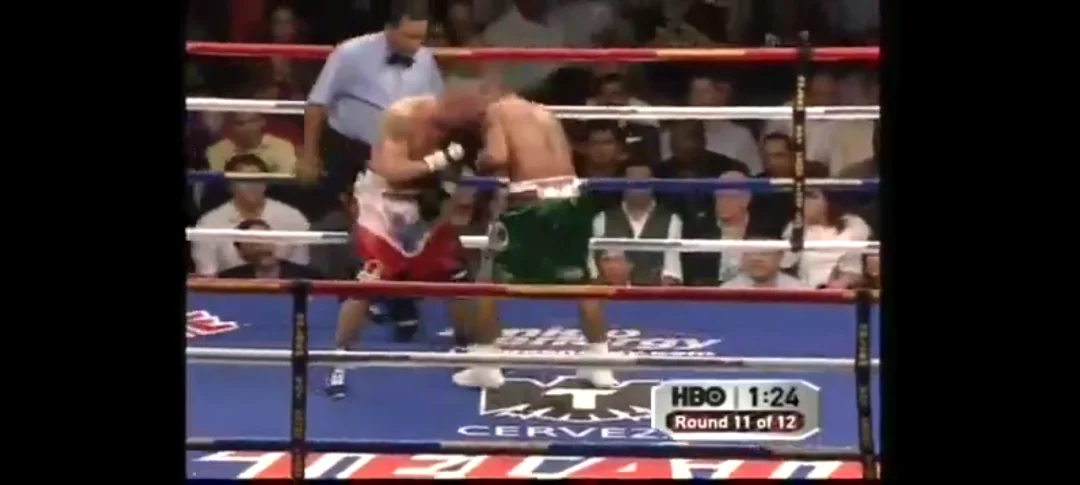
We are already months into 2026 and somehow, I still have not written a new “Forgotten Fade.” Not going to lie, life has been lifing pretty hard this year for a variety of reasons. That said, I never really stop thinking about boxing. Usually if a random fight pops into my head, shows up on my YouTube feed, or gets brought up in conversation, I make a point to text myself about it so I can revisit it later. This fight actually came up during a random conversation with my Ring Gang brothers, and once it did, I immediately knew it deserved the “Forgotten Fade” treatment. Some fights are technical masterclasses. Others are brutal wars built entirely on toughness, pressure, heart, and pure violence. This fight was definitely the second kind. So today we revisit Rocky Juarez vs. Jorge Barrios — one of the most underrated action fights of the 2000s. This fight took place on HBO Boxing After Dark, September 6, 2008. It was part of the undercard for Juan Diaz vs Michael Katsidis.
From the opening bell, Barrios fought like a man who wanted to drown Juarez in pressure. He came forward nonstop, pumping his jab and throwing combinations to the body while refusing to give Juarez a second to breathe. Juarez stayed calm early, keeping a tight guard and trying to pick his spots with counters, but Barrios’s activity was impossible to ignore.
Round 2 immediately showed why Barrios was such a dangerous fighter during his prime. He ripped hooks to the body, mixed in uppercuts, and started landing hard right hands upstairs. One uppercut landed perfectly and visibly hurt Juarez, briefly buckling his legs and forcing him into survival mode. At that point, it honestly looked like Barrios might overwhelm him completely. But slowly, Juarez began figuring things out.
By the third round, Juarez started timing Barrios as he recklessly rushed forward. The left hook became a huge weapon for Juarez, repeatedly snapping Barrios’s head back. Swelling quickly developed around Barrios’s right eye, and for the first time you could see the damage beginning to accumulate. Barrios kept attacking, but there were already signs that his nonstop aggression was leaving him open defensively. He also lost a point for a low blow during the round.
As the fight moved into the middle rounds, the pace somehow got even crazier. Barrios kept throwing punches in bunches, attacking the body relentlessly and trying to overwhelm Juarez with sheer output. Juarez, meanwhile, stayed composed and patient, waiting for openings and landing the cleaner, harder counters whenever Barrios got reckless. That dynamic made the fight fascinating. Barrios was often the busier fighter, but Juarez’s punches clearly carried more damage. Every time Barrios stormed forward wildly, Juarez seemed to catch him with a sharp left hook or straight right hand.
By Rounds 6 and 7, momentum quietly started shifting. The punishment on Barrios’s face became impossible to ignore. His right eye was swelling badly, and he was getting tagged more and more during exchanges. Still, he refused to back off. Even while taking heavy shots, Barrios continued marching forward and throwing punches at an insane pace.
Rounds 8 and 9 turned into absolute firefights. Both men stood in close range trading bombs, with Barrios trying to force nonstop exchanges while Juarez looked for precision counters. Barrios lost another point for a low blow in Round 9, adding even more drama to an already chaotic fight. Even as fatigue started creeping in, he never stopped pressing the action.
Then came Round 10 — one of the wildest rounds you will ever watch in a junior lightweight fight. Barrios threw an unbelievable 160 punches during the round, which CompuBox later recorded as a junior lightweight record at the time. The pace was absurd. Watching it back now is exhausting enough, so I can’t even imagine fighting at that tempo. Yet despite Barrios throwing nonstop, Juarez stayed calm and continued landing the cleaner, harder punches.
By Round 11, the damage had finally caught up with Barrios. Juarez completely took over as Barrios’s defense fell apart. Juarez’s timing became razor sharp, and a crushing combination finally dropped Barrios to the canvas. Somehow, Barrios got back to his feet and tried to continue, showing ridiculous toughness. But the punishment had become too severe. His upper lip had been split horrifically, blood pouring from his mouth while the ringside physician stepped in to examine the damage. After checking the injury, the doctor advised referee Rafael Ramos to stop the fight at 2:55 of Round 11. At the time of the stoppage, Juarez was ahead on two scorecards, 96-92 and 95-93, while the third judge had the fight even at 94-94. The aftermath of the fight ended up becoming important for both men, but in completely different ways.
For Rocky Juarez, the win over Barrios felt like another opportunity to finally break through and capture a major world title. Fans already respected Juarez because of his Olympic pedigree, toughness, and willingness to fight elite competition. The Barrios victory only strengthened that reputation. It showed once again that Juarez could survive brutal pressure, stay disciplined, and eventually break opponents down with patience and heart.
Unfortunately, Juarez’s career kept following the same frustrating pattern: great performances, close fights, and painful near misses. His fights with then-WBA featherweight champion Chris John are probably the best examples of that frustration. Their first fight ended in a rare unanimous draw, allowing John to retain the title. The rematch saw John win more convincingly, but even then, Juarez remained respected for how competitive he consistently was against elite opposition. Juarez had already shared the ring with fighters like Marco Antonio Barrera, Juan Manuel Marquez, and Humberto Soto. The first Barrera fight especially remains controversial among many fans to this day. Juarez pushed all of them in competitive fights, but the signature championship victory always seemed just out of reach.
As the years passed, Juarez’s physically demanding style slowly caught up with him. He built his career on toughness, pressure, and durability, but that style takes a serious toll over time. Later losses to fighters like Vicente Escobedo, Jason Litzau, and Jorge Linares showed that he was no longer the same fighter physically. Still, Juarez managed a few late-career upset wins over Antonio Escalante and Rene Alvarado before eventually ending his career with a loss to Robinson Castellanos.
Even without winning a major world title, Juarez remains one of those fighters that hardcore boxing fans will always appreciate. His record doesn’t fully tell the story because so many of his losses came against elite opponents in razor-close fights. Over time, he became remembered as a true warrior — one of the toughest and most respected fighters of his era.
For Jorge Barrios, however, life after the Juarez fight became much darker and far more turbulent. Inside the ring, the punishment from the fight appeared to accelerate his decline. Before Juarez, Barrios had built his reputation as one of boxing’s most entertaining pressure fighters. As a former WBO junior lightweight champion, he was known for nonstop aggression, insane punch volume, and fan-friendly wars. But after the Juarez fight, he never quite looked the same again.
Oddly enough, Barrios would not officially lose again for nearly 13 years — but there was a major reason for that. In 2010, Barrios became involved in a fatal automobile accident in Argentina involving a pregnant woman who later died from her injuries. The incident immediately became massive national news and generated enormous controversy. Reports that Barrios fled the scene only intensified public backlash against him. In 2012, Barrios was convicted in connection with the incident and sentenced to prison for a little over four years. By the time he eventually returned to boxing after prison, the decline was obvious. His reflexes looked slower, his durability had faded, and the aggressive style that once made him dangerous increasingly left him vulnerable. The momentum from his championship years was completely gone. Instead of being viewed as a serious title threat, he became an aging veteran struggling to stay relevant.
Looking back now, the Juarez-Barrios fight almost feels symbolic of both men’s futures. Juarez emerged battered but respected, remembered as a hardworking warrior who earned admiration despite never winning a major world title. Barrios, meanwhile, left the fight physically damaged and eventually saw his life spiral into controversy and tragedy outside the ring. Still, both men gave boxing fans an unforgettable war and a fight I absolutely recommend revisiting if you have never seen it before. Trust me — you will not be disappointed.